


South Sudan is on high alert with regard to the Ebola virus, as ministry of Interior issues a travel restriction for South Sudanese citizens to Ebola affected countries in West Africa.
South Sudan is on high alert with regard to the Ebola virus, as ministry of Interior issues a travel restriction for South Sudanese citizens to Ebola affected countries in West Africa.
The departments of Immigration and Wildlife have been instructed by the Minister Aleu Ayieny to secure borders to make it impossible for anyone with Ebola virus to enter South Sudan.
Earlier, the World Health Organisation (WHO) had declared Ebola epidemic a global emergency after the deadly virus killed hundreds in the West Africa countries of Sierra Leone, Liberia, Nigeria and Guinea.
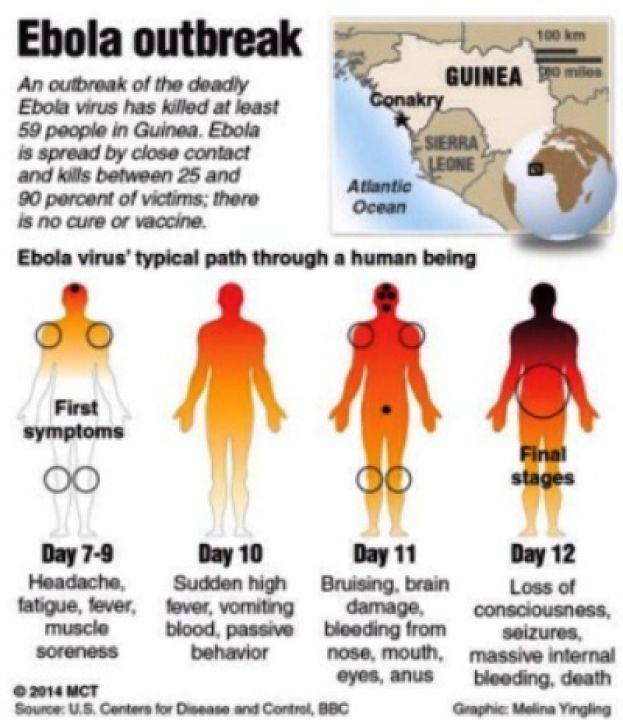
So far, the disease has claimed at least 932 lives and infected more than 1,700 people since breaking out in Guinea earlier this year, according to the WHO. No Ebola cases have been reported in South Sudan even as the government takes measures to secure its borders and citizens.
The ministry of health has enhanced active surveillance for detecting any cases of suspected febrile illness with haemorrhagic manifestations at all border crossings, after a laboratory-confirmed case of Ebola haemorrhagic fever (EHF) was reported in Uganda, raising a “high alert” for an epidemic threat in South Sudan.
The WHO says that the health systems and the public health infrastructure in South Sudan remains fragile owing to protracted conflict. At the same time, many parts of the country, including those bordering Uganda, are heavily compromised while there is heavy movement of people between the two countries, through both official and non-official border crossings.
The WHO predicts that an outbreak of Ebola haemorrhagic fever could be very deadly and devastating. It is therefore important to remain vigilant and enhance active surveillance for viral haemorrhagic fever, especially in bordering districts.
Ebola hemorrhagic fever is a disease caused by one of five different Ebola viruses. Four of the strains can cause severe illness in humans and animals. The fifth, Reston virus, has caused illness in some animals, but not in humans.
The first human outbreaks of Ebola occurred in 1976, one in northern Zaire (now Democratic Republic of the Congo) in Central Africa: and the other, in southern Sudan (now South Sudan). The virus is named after the Ebola River, where the virus was first recognized in 1976, according to the Centers for Disease Control and Prevention.
Symptoms of Ebola typically include: weakness, fever, aches, diarrhoea, vomiting and stomach pain. Additional experiences include rash, red eyes, chest pain, throat soreness, difficulty breathing or swallowing and bleeding (including internal).
BLOG COMMENTS POWERED BY DISQUS

