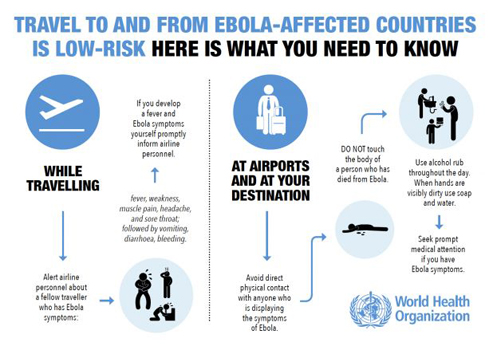

The Ebola crisis in West Africa could have been averted if governments and health agencies had acted on the recommendations of a 2011 World Health Organisation (WHO) Commission on global health emergencies. This is according to a US based health expert.
The Ebola crisis in West Africa could have been averted if governments and health agencies had acted on the recommendations of a 2011 World Health Organisation (WHO) Commission on global health emergencies. This is according to a US based health expert.
The comment, published in The Lancet by Professor Lawrence Gostin, Faculty Director of the O’Neill Institute for National and Global Health Law at Georgetown University, USA, calls for renewed international commitment to a health systems contingency fund to prevent another infectious disease crisis, together with long-term funding for enduring health systems development.
Although WHO has now implemented a plan for dealing with Ebola – five months after the virus first began to spread internationally – implementation will be further delayed while US$490 million are raised to meet the cost of tackling the epidemic. In the meantime, Ebola continues to spread amongst health workers and the general population, in countries where health resources were already strained before the outbreak.
The disease has hit West African countries of Liberia, Guinea, Sierra Leone and Nigeria. The WHO has reported that by 31 August, there were 3685 cases (probable, confirmed and suspected) and 1841 deaths by Ebola, reported by the ministries of health of Guinea, Liberia and Sierra Leone. In Nigeria, there have been 21 cases and 7 deaths, while in Senegal, one case has been confirmed but there are no Ebola deaths or suspected cases that have been reported.
The WHO reports that a separate outbreak of Ebola virus disease, which is not related to the outbreak in West Africa, was laboratory-confirmed on 26 August by the Democratic Republic of Congo (DRC), which borders South Sudan to the South West.
This week, the government of South Sudan announced that it was sending out teams to create awareness and pass information among communities living along the borders as a precautionary measure.
The Director for Health Education and Promotion in the ministry of health, Mary Dennis, told media that the educators will inform the public to look out for symptoms and report any suspected cases.
At the same time, the Western Bahr el-Ghazal state government also embarked on an Ebola sensitization campaign. The Acting Director General in the state ministry of health, Henry Gabriel Sasa, says they will make continuous efforts to prevent Ebola from entering the state.
The 2011 WHO Review Committee proposed a Global Health Emergency Workforce, backed by a US$100 million contingency fund, which would have enabled the rapid initial response needed to contain the Ebola outbreak, but the Commission was not acted upon by WHO, lacking sufficient financial commitment from governments in high-income countries.
According to Professor Gostin, to prevent the next epidemic, he said the solution is to fix inherent structural deficiencies like human resource shortages and fragile health systems. He recommends an international fund that will help to prepare for such epidemics in future.
“A dedicated International Health Systems Fund at WHO would rebuild broken trust, with the returns of longer, healthier lives and economic development far exceeding the costs. This fund would encompass both emergency response capabilities and enduring health-system development,” he says…But beyond self-interest are the imperatives of health and social justice - a humanitarian response that would work, now and for the future.”
BLOG COMMENTS POWERED BY DISQUS